Start for as low as $169 down. Enroll today and pay over time.
Start for as low as $169 down. Enroll today and pay over time.
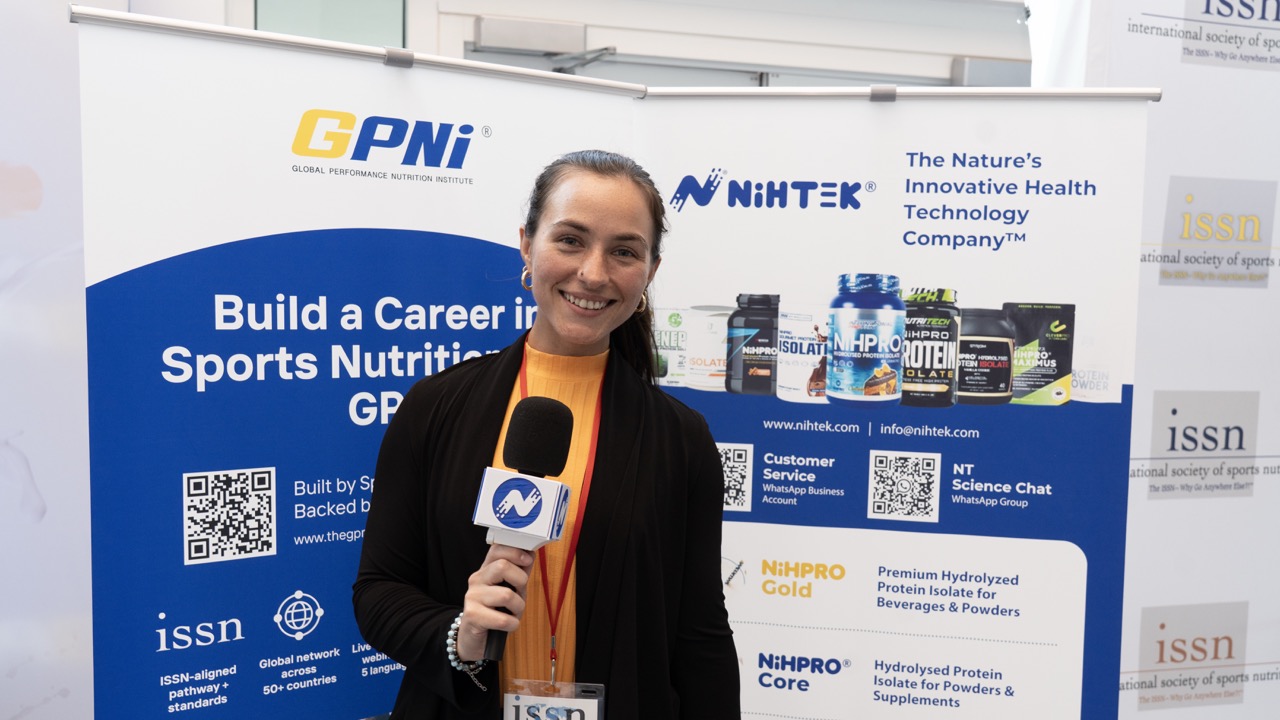
Allee Schellenberger picked a busy way to attend her first scientific conference. At ISSN 2026 she had a data blitz, a speaking presentation and a poster on her programme. When GPNi® caught up with her, what she wanted to talk about was the pleasure of being in a room full of people who cared about the same questions she did.
“Be more true to yourself.”
— Allee Schellenberger
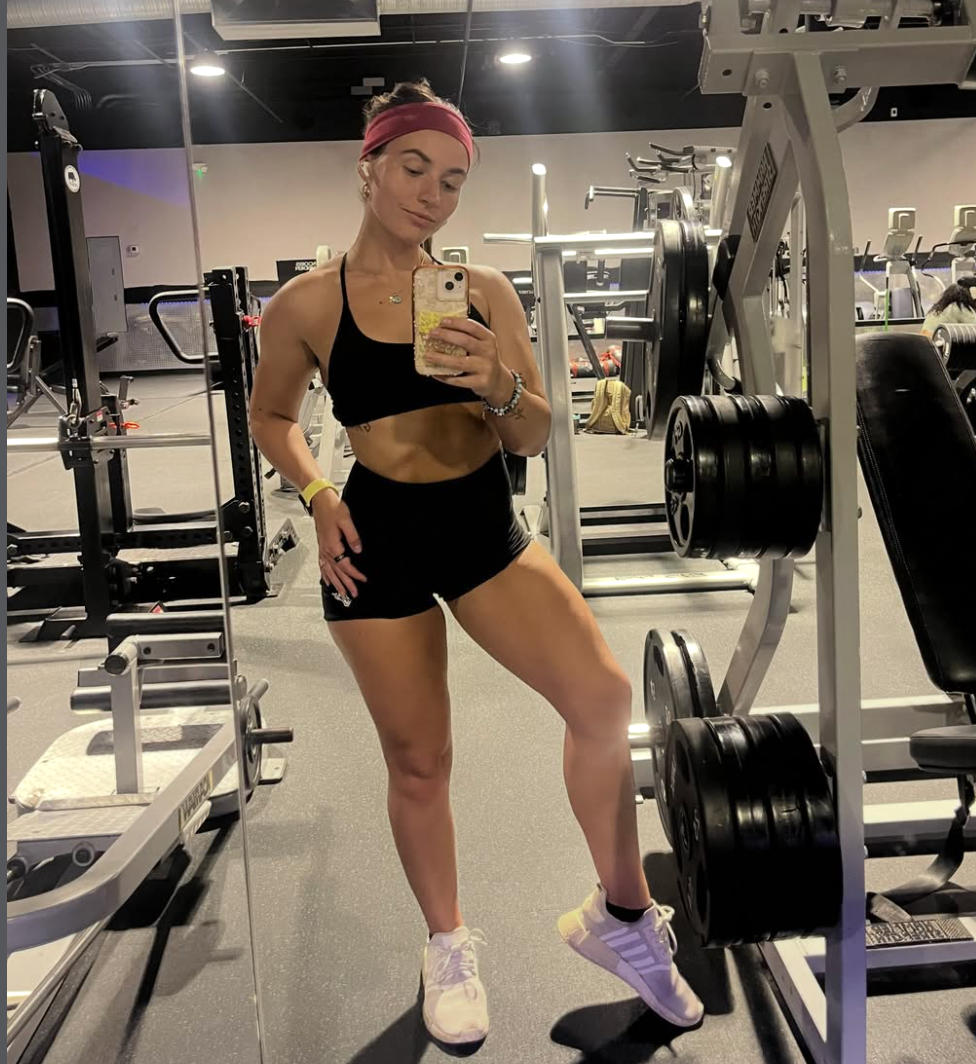
About three years before the interview, Schellenberger had started competing in bodybuilding. Preparing to compete gave her a reason to pay closer attention to food. She could see changes in her body as she trained and ate differently, and she liked trying to understand what she was seeing. When asked what first drew her to nutrition, she used a phrase familiar enough to pass unnoticed: “how food really is fuel.” For her, the discovery was personal. She wanted other people to have the chance to find that same interest.
As an exercise science student at the University of Tampa, she also began working on questions that had little to do with what to eat. The ISSN presenter archive lists her work on using portable ultrasound to assess tendon thickness. At first glance it’s an unexpected subject for someone whose introduction to the field was contest preparation. Look a little closer and there’s a connection: before you can explain a change in the body, you need a way to measure it.
A tendon measurement makes the point particularly well. Imagine two scans that give slightly different readings. Before calling the difference a change in the tendon, you would want to know how and where each measurement was taken. That is an example of the kind of problem the topic raises, rather than a claim about what her project found. It’s also a reason for a student interested in training to stop at a poster they might otherwise walk past.
At her first conference, Schellenberger had three different ways to talk about research: a data blitz, an oral presentation and a poster. For another student considering a first submission, it’s worth thinking about what separates those formats. The hard part of a blitz is choosing what to leave out. If listeners remember one finding by the time the next speaker starts, which one should it be?
A longer talk gives you time to explain why the question was worth asking in the first place. A poster changes who gets to choose the order. One visitor might go straight to the figure; another might want you to explain the measurement before they look at a single number. In that setting, a well-placed question from a visitor can make for a better conversation than a perfectly rehearsed speech.
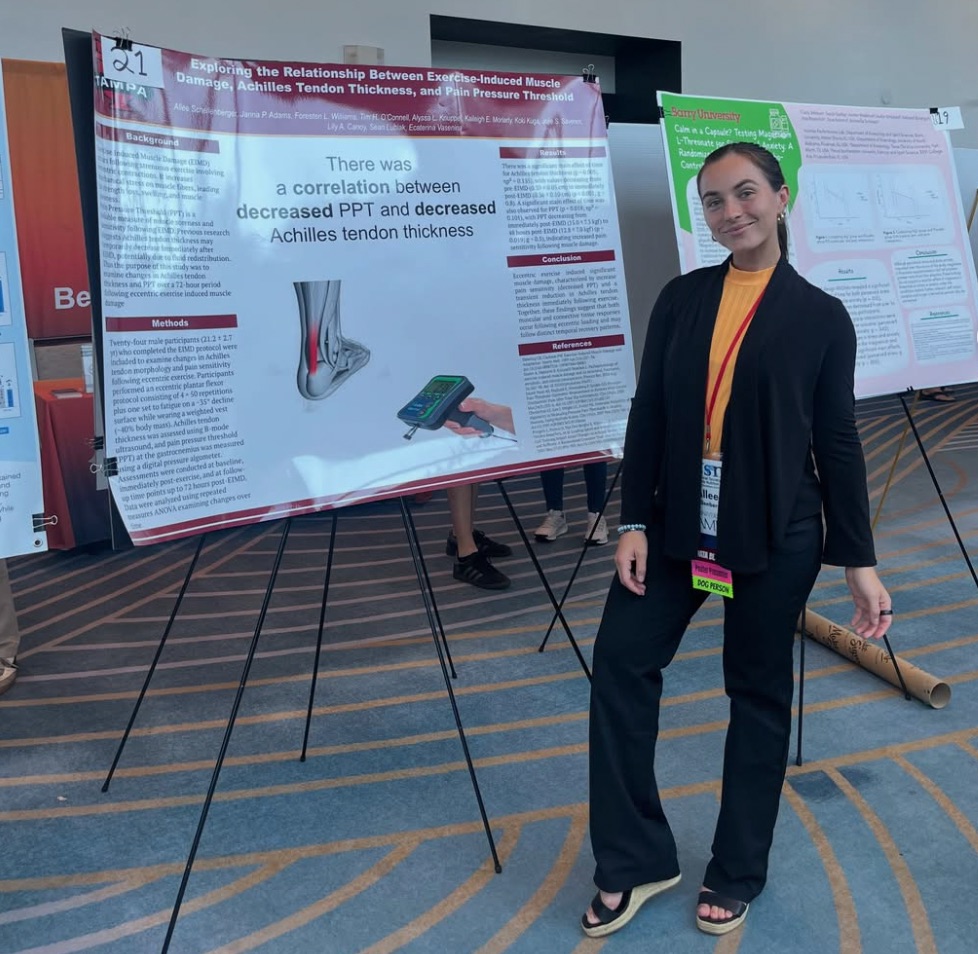
What Schellenberger singled out in the interview wasn’t a particular slot on the programme. It was the pleasure of looking around and finding that other people wanted to talk about the same things: how the human body works and what nutrition and fitness might do to improve it. That enthusiasm was familiar from bodybuilding. Having a roomful of people to share it with was new.
Asked what she would tell her younger self, she answered in a single sentence: “Be more true to yourself and do not care what other people think.” She didn’t offer a five-year plan, and her story is more useful without one. You can be interested in food, end up explaining tendon measurements and still be following your own curiosity. The connection doesn’t have to be obvious to everybody else.
If you had one minute to share a finding from your own work, what would you want the audience to remember?
Follow Allee Schellenberger
LinkedIn: https://www.linkedin.com/in/alleeschellenberger/
Instagram: https://www.instagram.com/alleeschellx/
GPNi® and ISSN-aligned education can support careers beyond direct athlete practice. Understanding evidence, mechanisms, dosage, safety, and application also strengthens work in ingredients, product development, technical sales, and customer education.
Explore the pathways:
Latest Articles
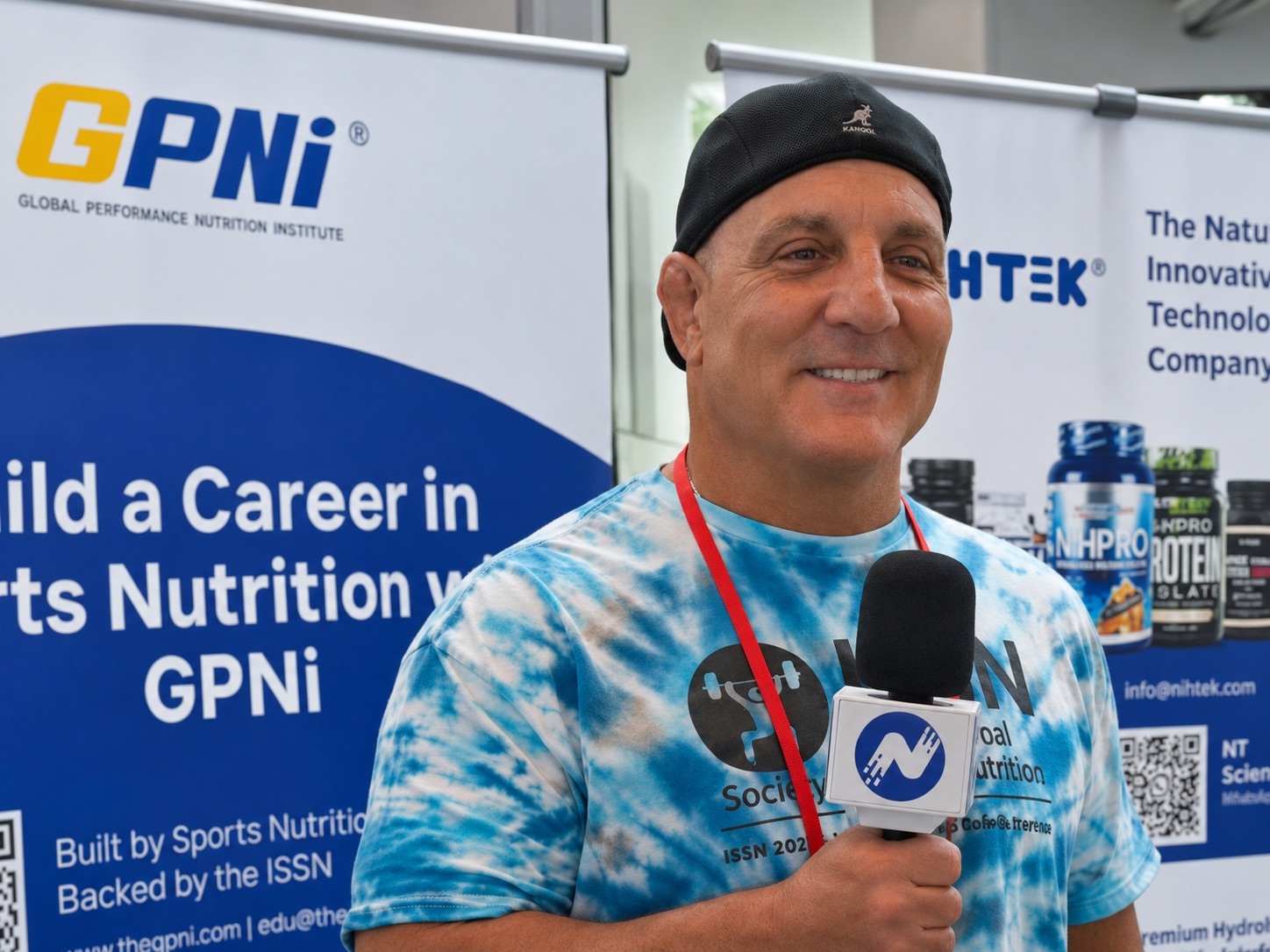
GPNi® Career Insights | His Athletes Were Getting Stronger. He Still Had a Question About Food.
Tony Ricci explains why success as a strength coach sent him back to study nutrition, and what he wants students to understand about food and performance.
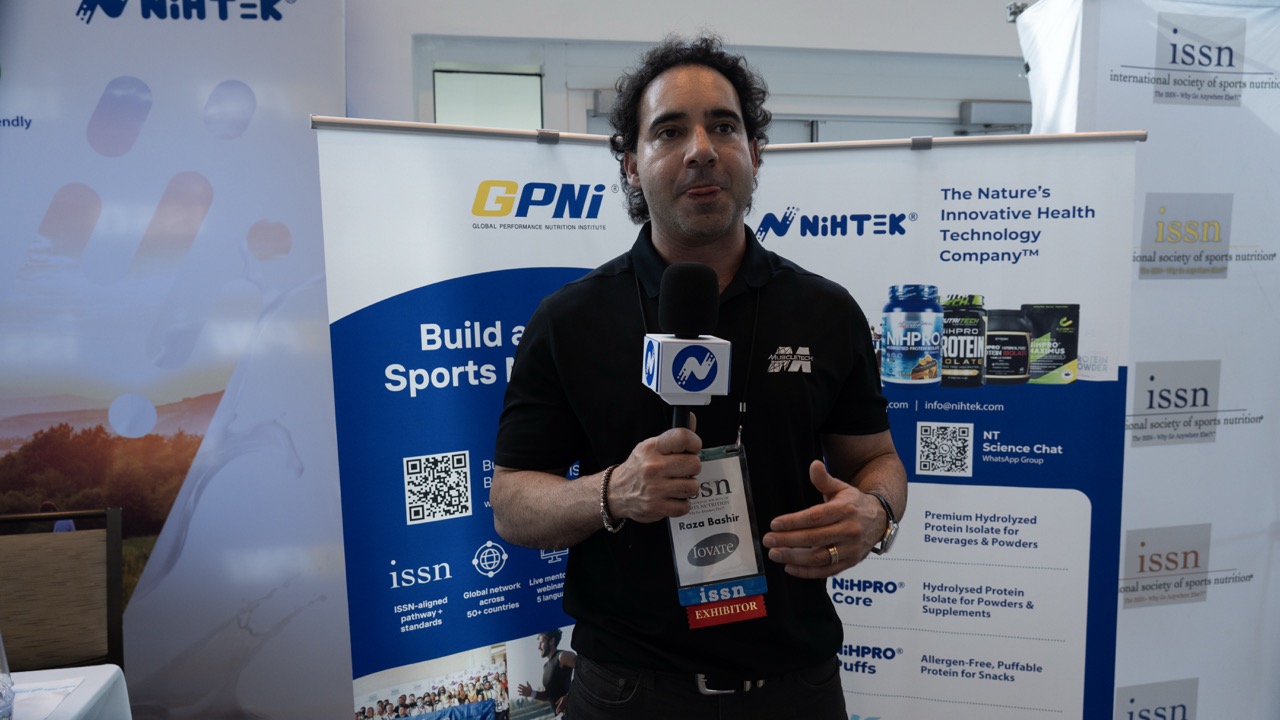
GPNi® Career Insights | From Reading Supplement Labels to Running Iovate
Iovate CEO Raza Bashir traces his path from reading supplement labels to formulating products and explains why his team keeps coming back to ISSN.
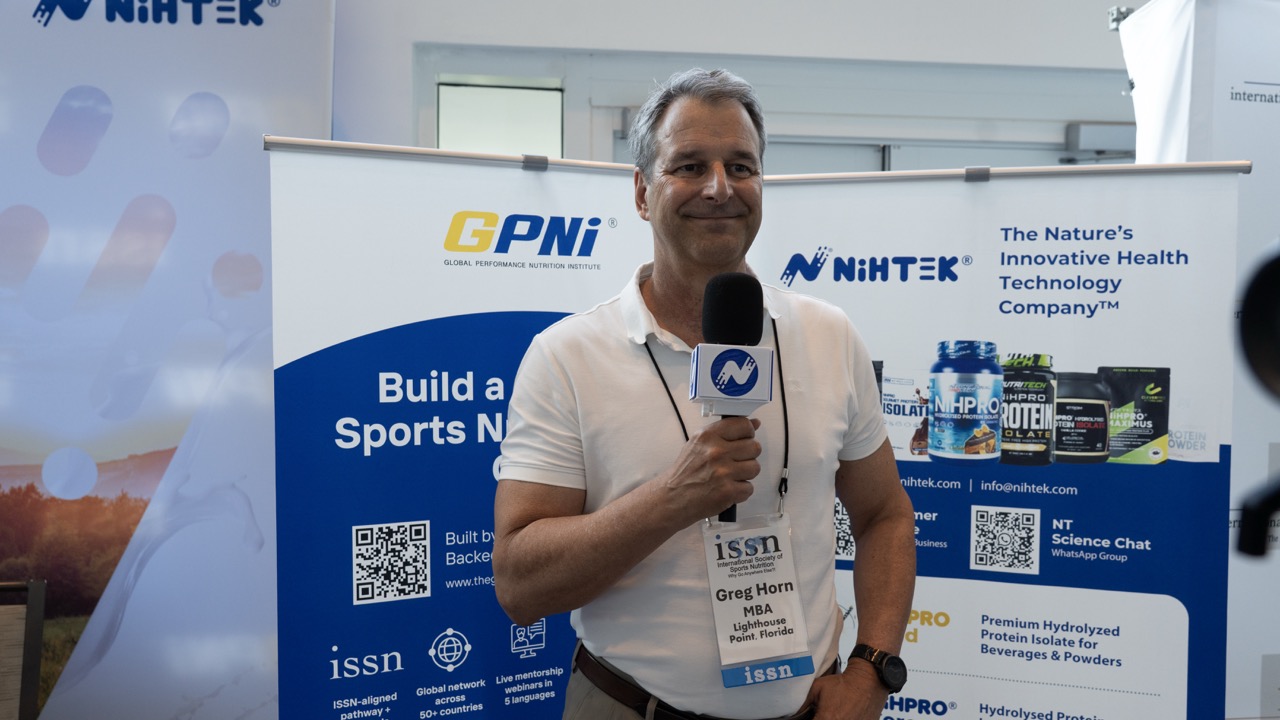
GPNi® Career Insights | What Greg Horn Looks for at the Poster Session
Greg Horn, who originated the CELSIUS drink concept, explains what he looks for in clinical research and why he keeps returning to the ISSN poster session.
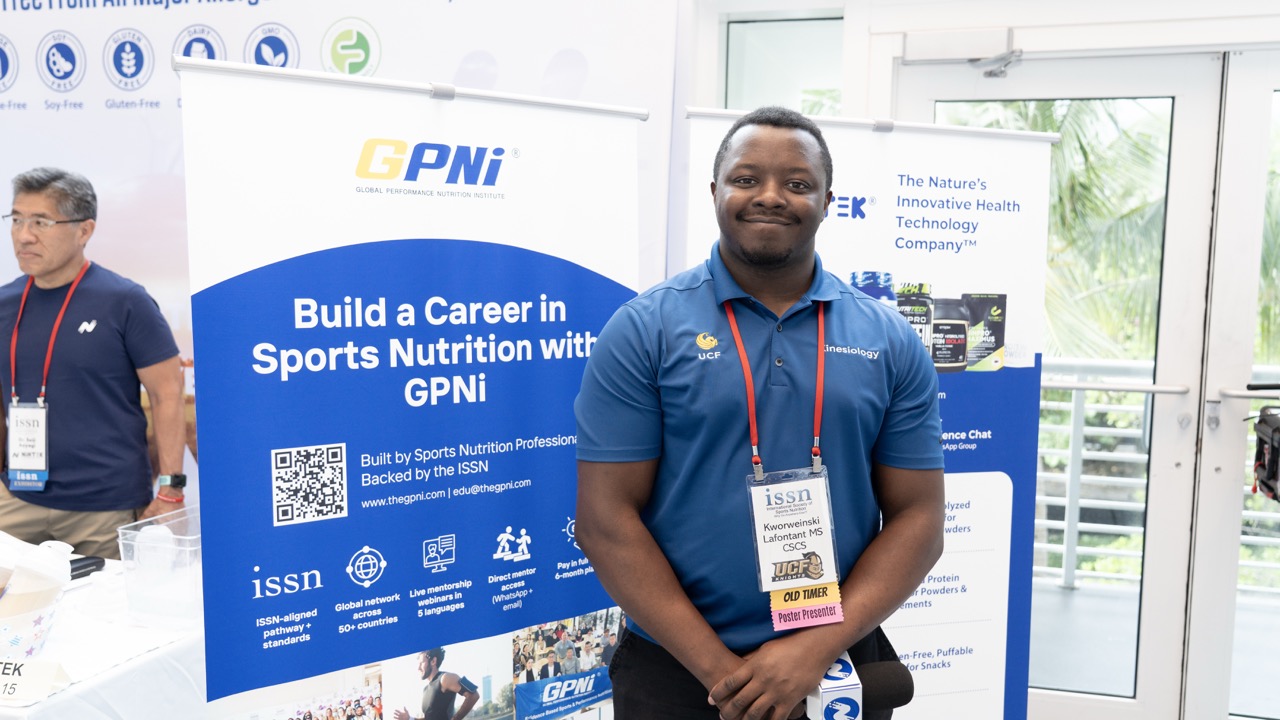
GPNi® Career Insights | The Research Question He’d Rather Share Than Win
Kworweinski Lafontant traces his path from basketball to kinesiology research and explains why sharing an unanswered question can matter more than publishing first.
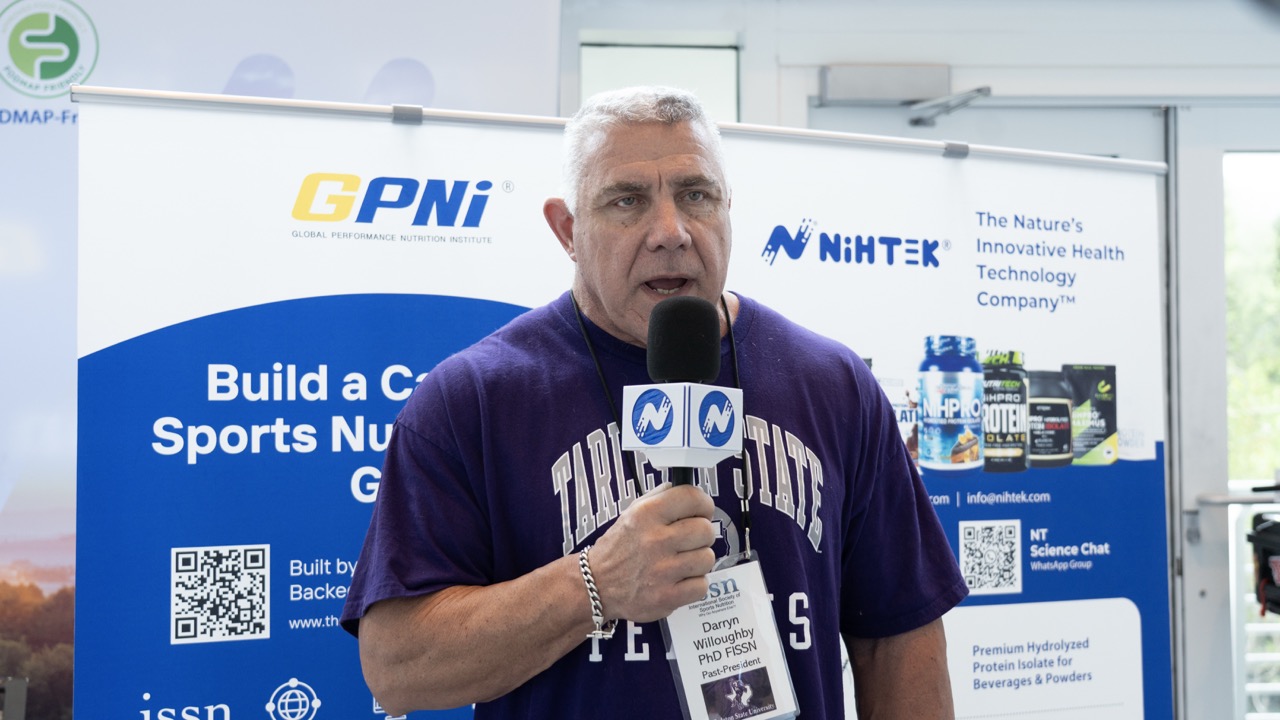
GPNi® Career Insights | What the Bodybuilding Stage Couldn’t Tell Him
Darryn Willoughby recalls how bodybuilding shaped his research on muscle growth and why he helped make a case for a dedicated sports nutrition conference.
Subscribe to our newsletter and receive a selection of cool articles every week
GPNi® Career Insights | His Athletes Were Getting Stronger. He Still Had a Question About Food.
19 Nov, 2026
GPNi® Career Insights | From Reading Supplement Labels to Running Iovate
19 Nov, 2026
GPNi® Career Insights | What Greg Horn Looks for at the Poster Session
19 Nov, 2026
GPNi® Career Insights | The Research Question He’d Rather Share Than Win
19 Nov, 2026
About