Start for as low as $169 down. Enroll today and pay over time.
Start for as low as $169 down. Enroll today and pay over time.
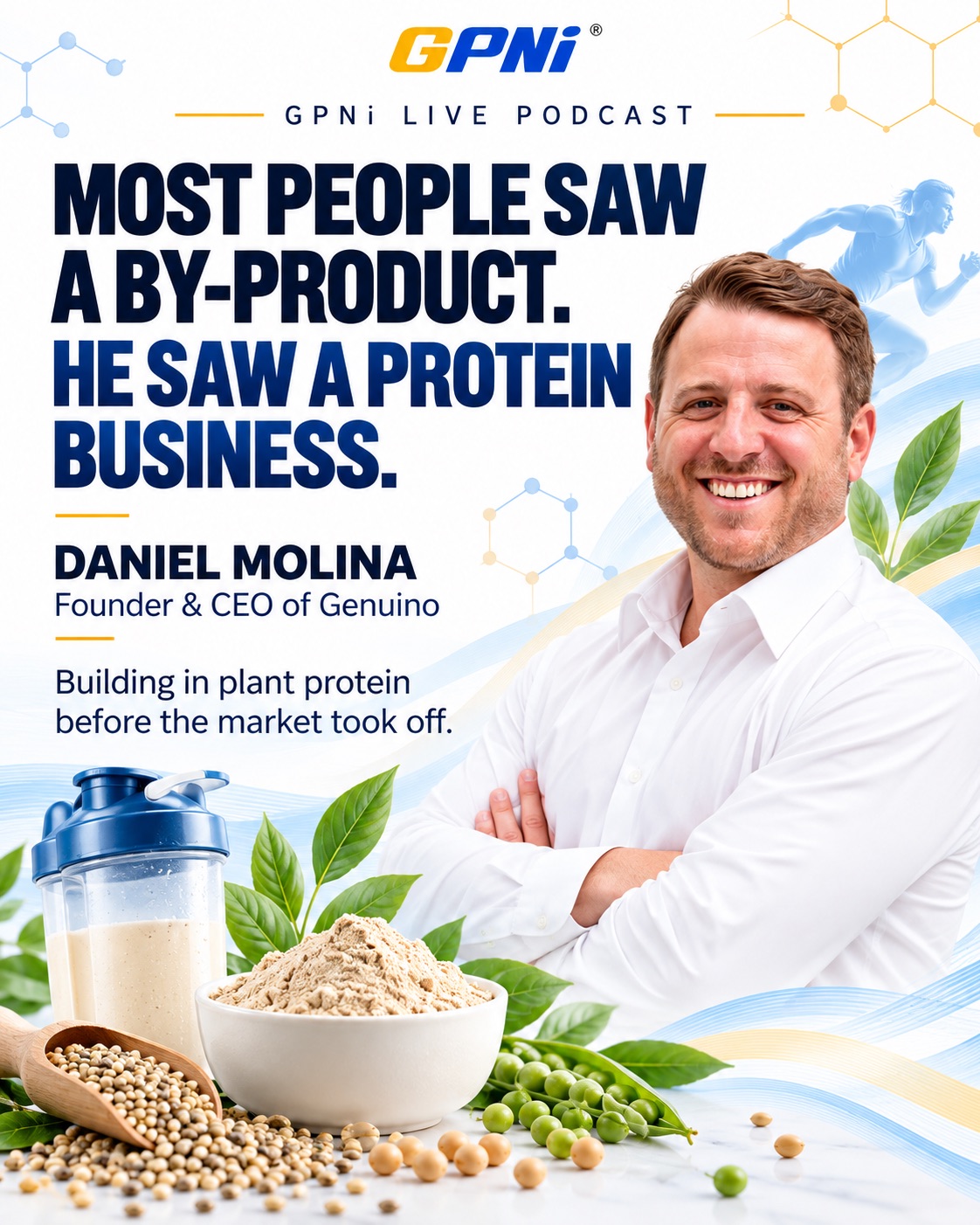
Most people saw a by-product.
Daniel Molina saw a protein business.
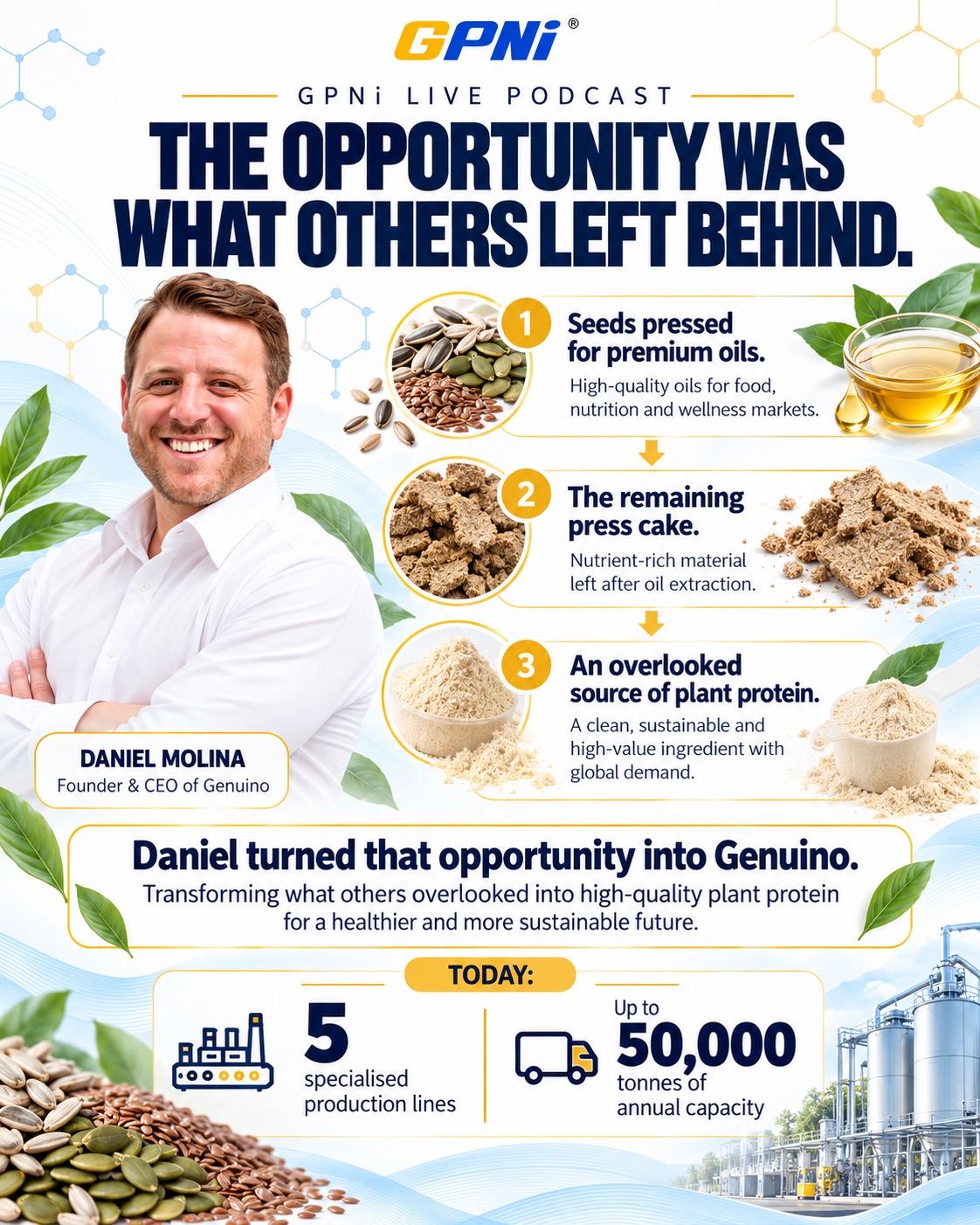
When seeds are pressed to produce oil, the material left behind is often treated as low-value press cake. Daniel recognised that it could be transformed into almond, hemp, sesame and other plant-protein ingredients.
This was not after plant protein became a global trend. It was fourteen years ago, when the category was still developing and customers often needed to be convinced that the opportunity existed at all.
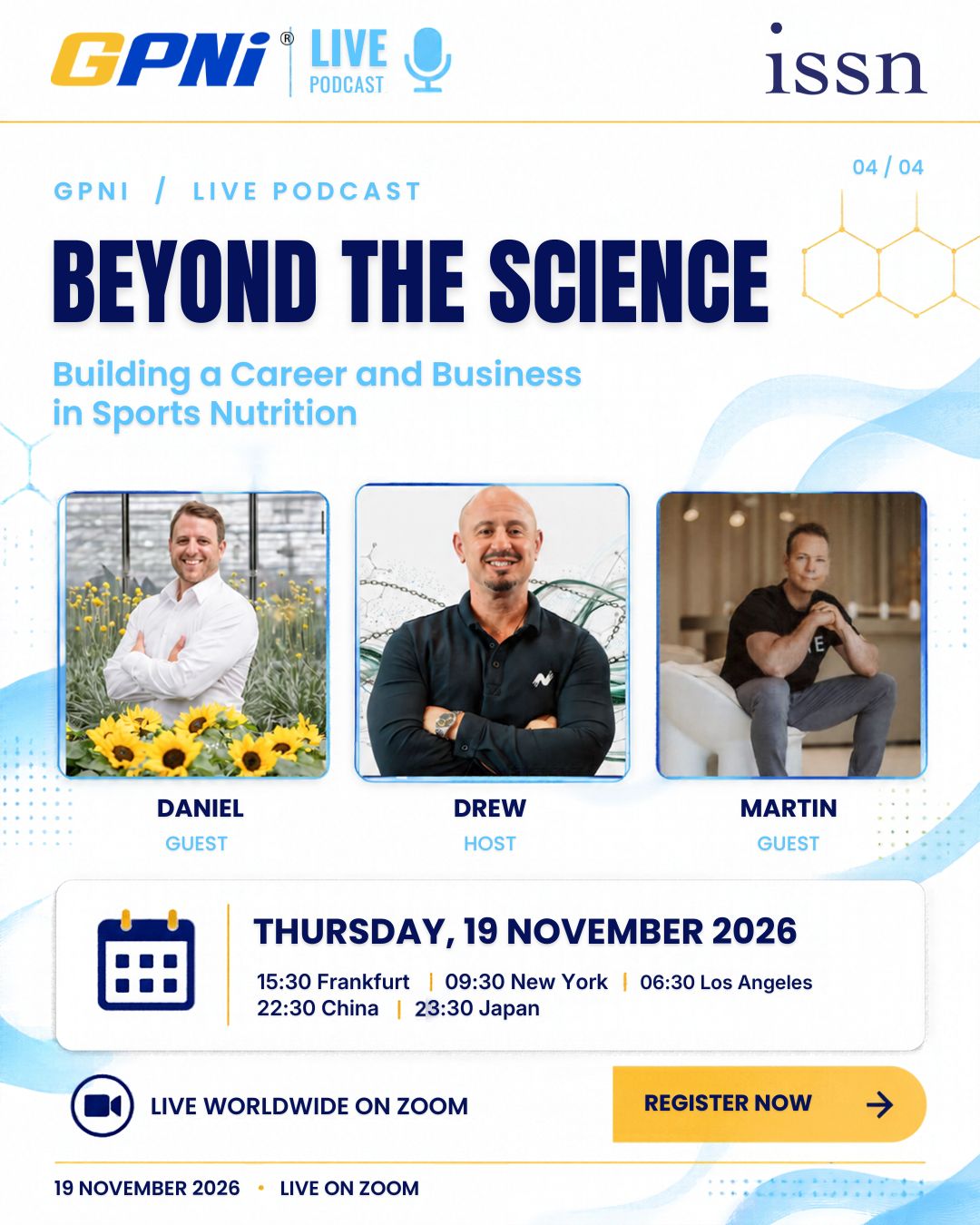
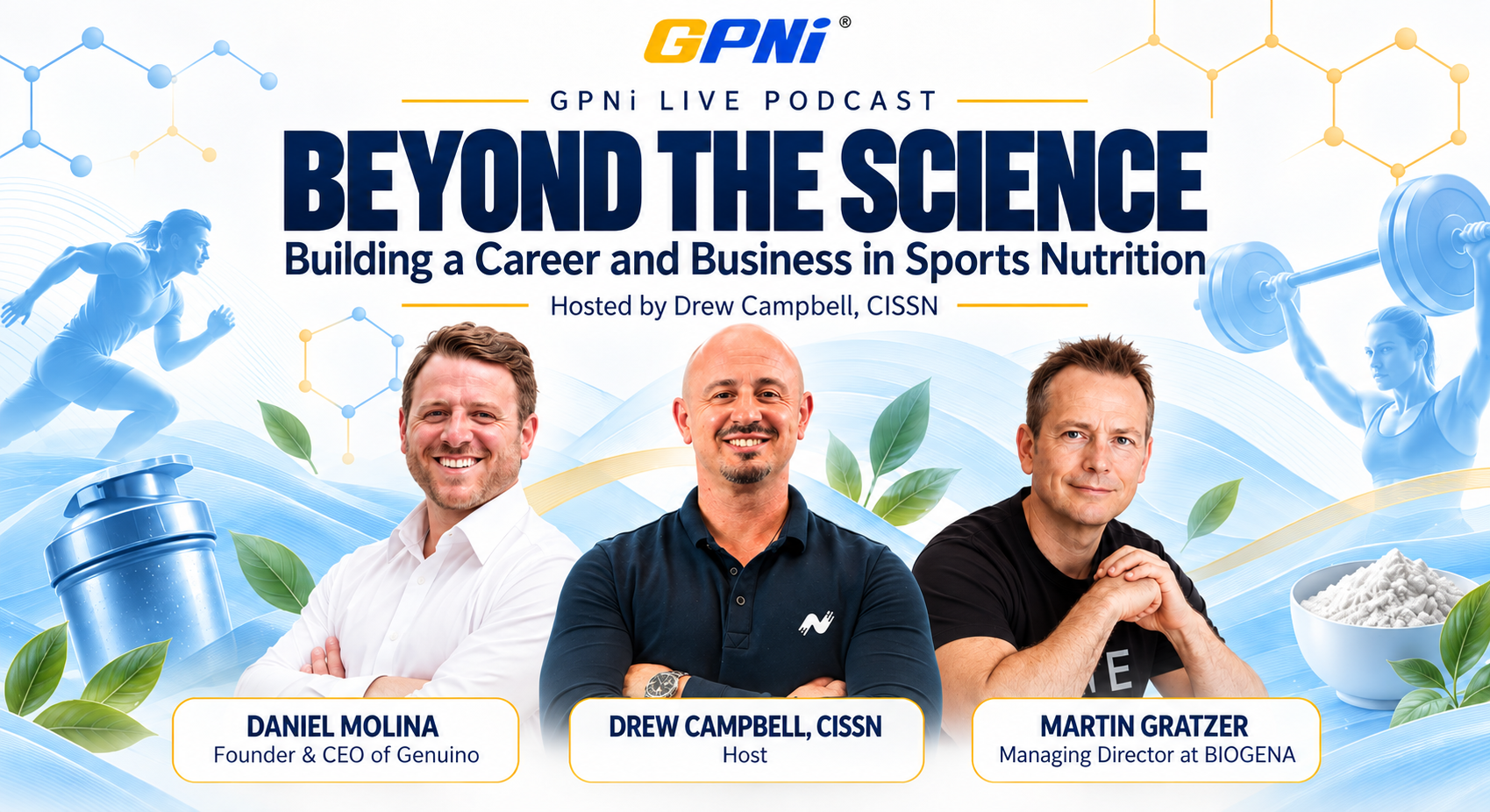
On November 19, Daniel will join GPNi live from Frankfurt to explain how an athlete’s interest in nutrition became an international ingredient business—and what building before the trend taught him about careers, products and entrepreneurship.
Beyond the Science: Building a Career and Business in Sports Nutrition
Date: Thursday, November 19, 2026
Time:
Germany: 3:30 pm CET / US East Coast: 9:30 am EST / US West Coast: 6:30 am PST / China: 10:30 pm / Japan: 11:30 pm
Platform: Live worldwide on Zoom
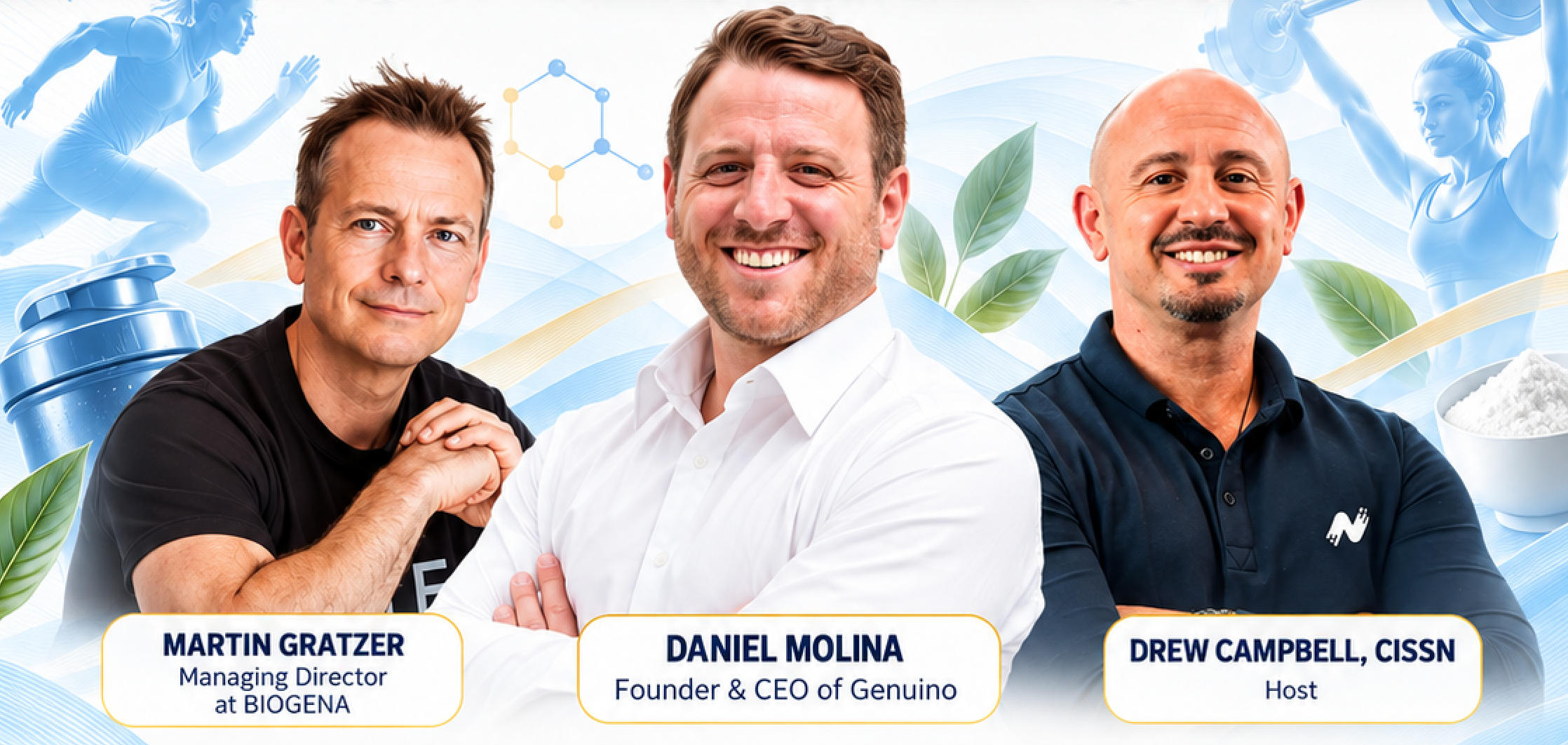
Host: Drew Campbell, CISSN
Guests: Daniel Molina and Martin Gratzer
Language: English, with AI-powered live translated captions
Registration: https://nxkkc.share-na2.hsforms.com/2asfMJ5WgQlqYiRNi6W2lCg
Daniel grew up playing football in the youth academy of Austria Vienna.
Sport taught him early that nutrition could affect training, recovery and performance. But his career would eventually take him much further behind the finished product—to the farms, raw materials, machinery and supply chains that make nutrition products possible.
His idea for Genuino started with premium seeds.
The seeds were carefully sourced and pressed to produce high-quality oils. Instead of discarding or undervaluing the remaining press cake, Daniel built a model that turned it into plant-protein ingredients.
What others viewed as waste became the centre of the business.
That sounds obvious only after someone has made it work.
Daniel had to identify the opportunity before the market was ready, explain the value to customers and build a system capable of delivering consistent ingredients at commercial scale.
Today, Genuino supplies food brands and manufacturers across Europe.
The company works across the full chain—from agricultural sourcing and oil milling to functional proteins and finished-product support. Its operation includes five specialised production lines and capacity of up to 50,000 tonnes per year.
Daniel also works with agricultural partners across Togo, Egypt and Austria, connecting different crops, markets and production systems. Through his company, he is a stakeholder in Europe’s largest oil mill.
This gives him a view of the industry that most consumers—and many practitioners—never encounter.
A finished protein product may look simple on a shelf. Behind it are decisions about raw materials, processing, functionality, quality, traceability, cost, manufacturing capacity and reliable supply.
If any one of those fails, the product may never reach the athlete.
Sports nutrition is not built only in laboratories or consultation rooms.
It is also built in fields, factories, quality departments, product-development teams and international supply chains.
A protein ingredient must offer nutritional value, but that alone is not enough. It must also perform in a formulation, remain consistent from batch to batch, meet safety and regulatory expectations, and be available in the quantity a growing brand requires.
Daniel works where those demands meet.
For nutritionists and coaches, his perspective reveals what happens before an ingredient reaches the label. For founders and product developers, it shows why a strong concept can still fail without the right production and supply strategy. For students, it exposes career paths that go far beyond direct nutrition practice.
Entering a mature category is one thing. Building while the category is still emerging is another.
Daniel did not have the benefit of a market that already understood plant protein. He had to help customers see why these ingredients mattered and how they could be used.
That required more than technical knowledge. It required timing, persistence, commercial communication and the ability to work across farming, production, logistics and sales.
His career offers several lessons:
Perhaps most importantly, Daniel’s story shows that opportunity often appears before there is a clear job title for it.
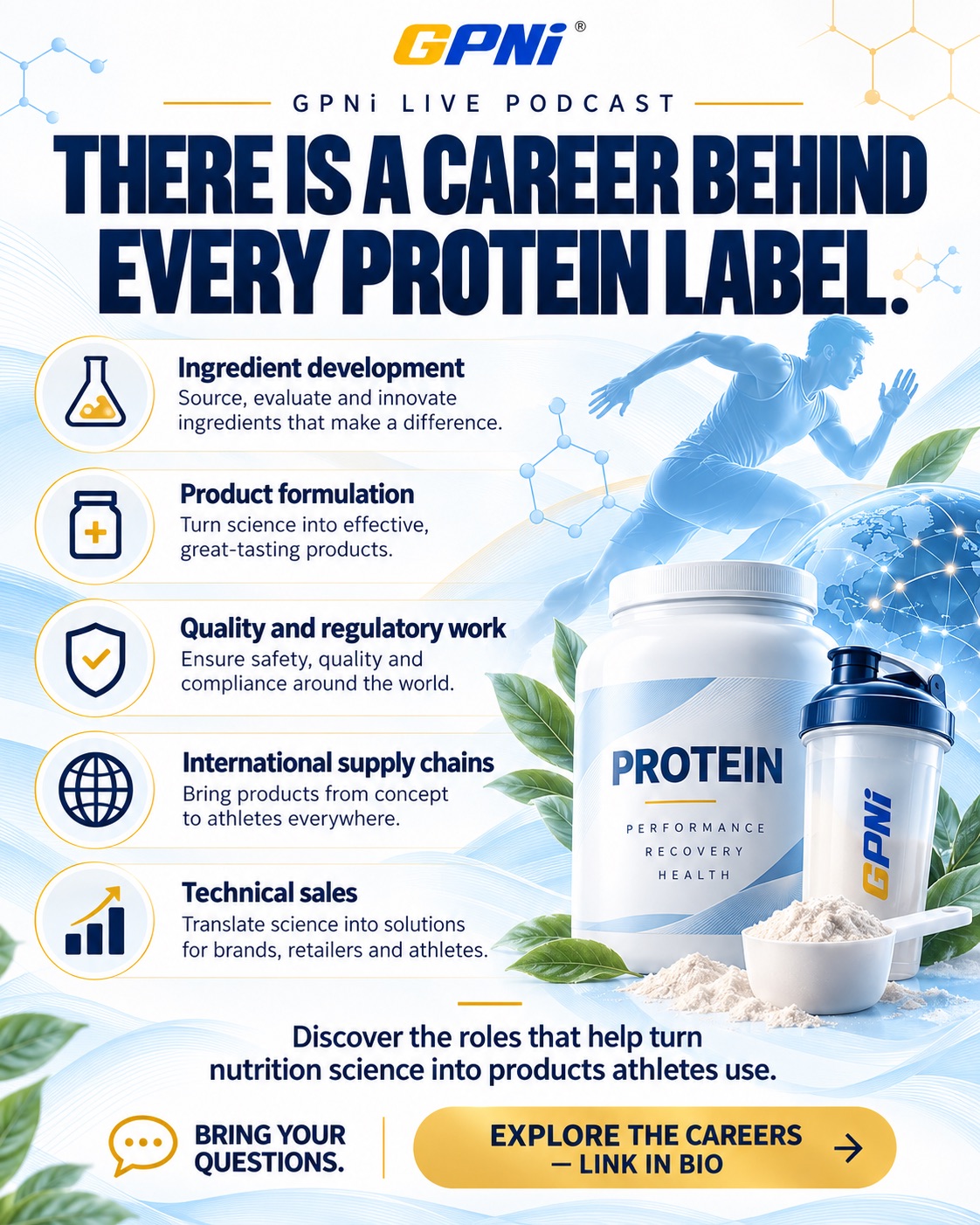
The sports and performance nutrition industry needs nutritionists—but it also needs ingredient specialists, product developers, quality professionals, regulatory experts, supply-chain managers, technical salespeople and entrepreneurs.
Many people never consider these roles because they see only the finished product.
Daniel can explain what happens behind that product, what kinds of people the industry needs and where new opportunities may be emerging across plant protein, functional foods and international ingredient supply.
The live Q&A will allow participants to put their questions directly to Daniel, Martin and Drew.
You can ask Daniel how he recognised the opportunity, which decisions proved most expensive, what skills he values in employees and partners, or what he would do differently if he were entering the industry today.
You can also ask where plant protein is heading next—and how someone with a background in sport, nutrition, food science or business might find a place in that future.
Daniel’s story is not simply about turning press cake into protein.
It is about seeing value before other people do—and then doing the difficult work required to prove that you were right.
Join us live on November 19 to hear how he did it.
Latest Articles
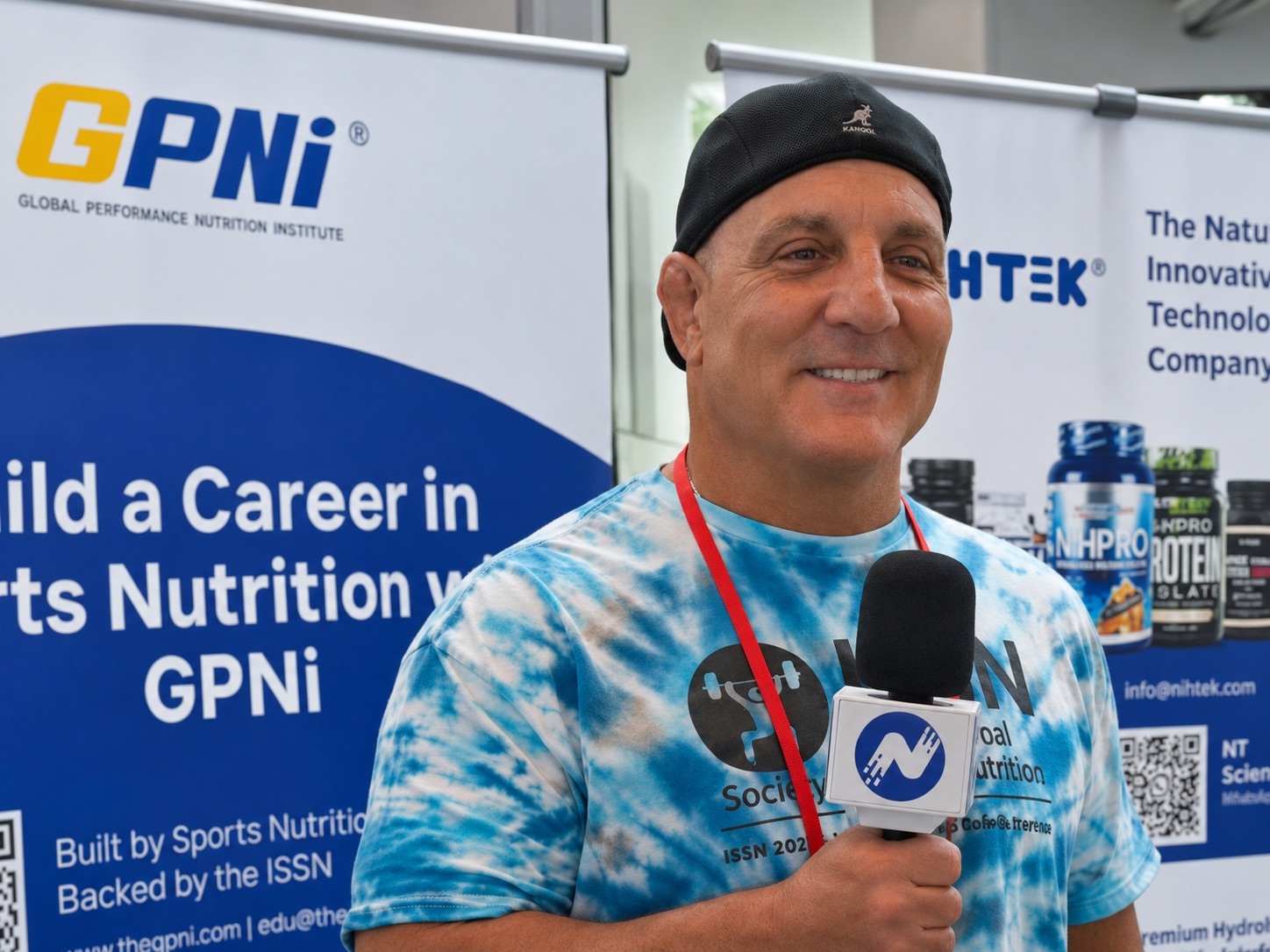
GPNi® Career Insights | His Athletes Were Getting Stronger. He Still Had a Question About Food.
Tony Ricci explains why success as a strength coach sent him back to study nutrition, and what he wants students to understand about food and performance.
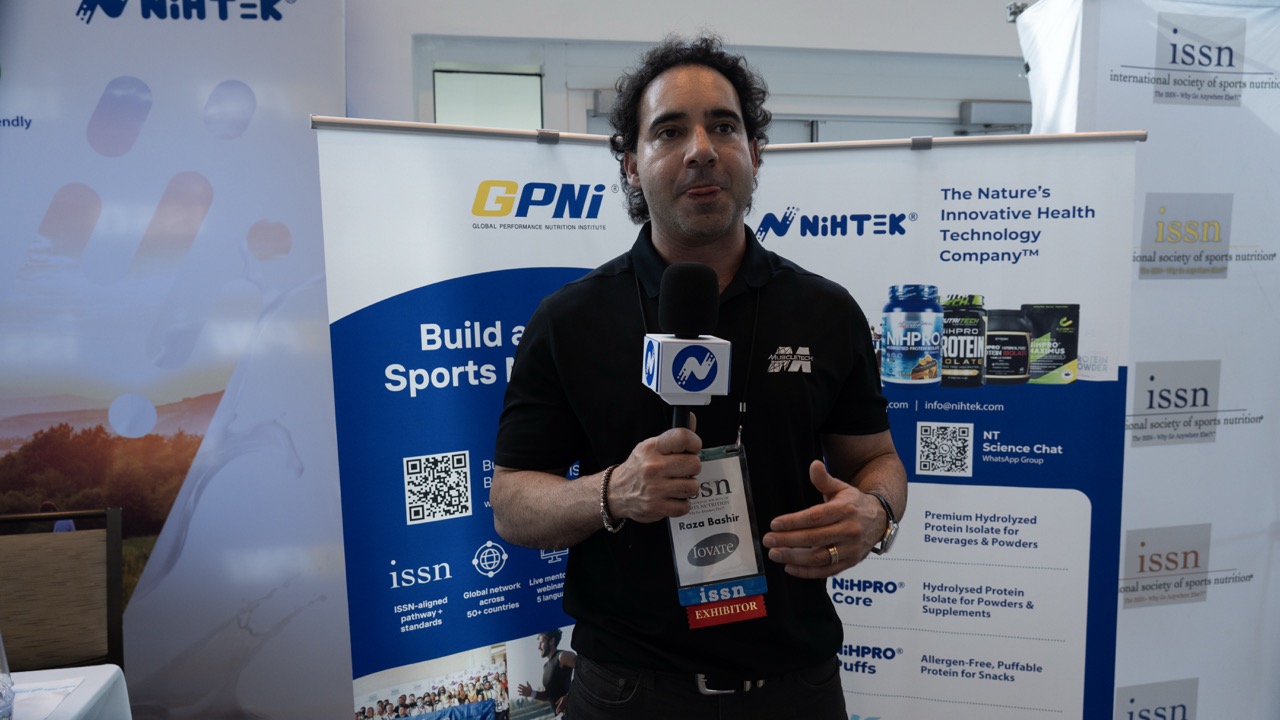
GPNi® Career Insights | From Reading Supplement Labels to Running Iovate
Iovate CEO Raza Bashir traces his path from reading supplement labels to formulating products and explains why his team keeps coming back to ISSN.
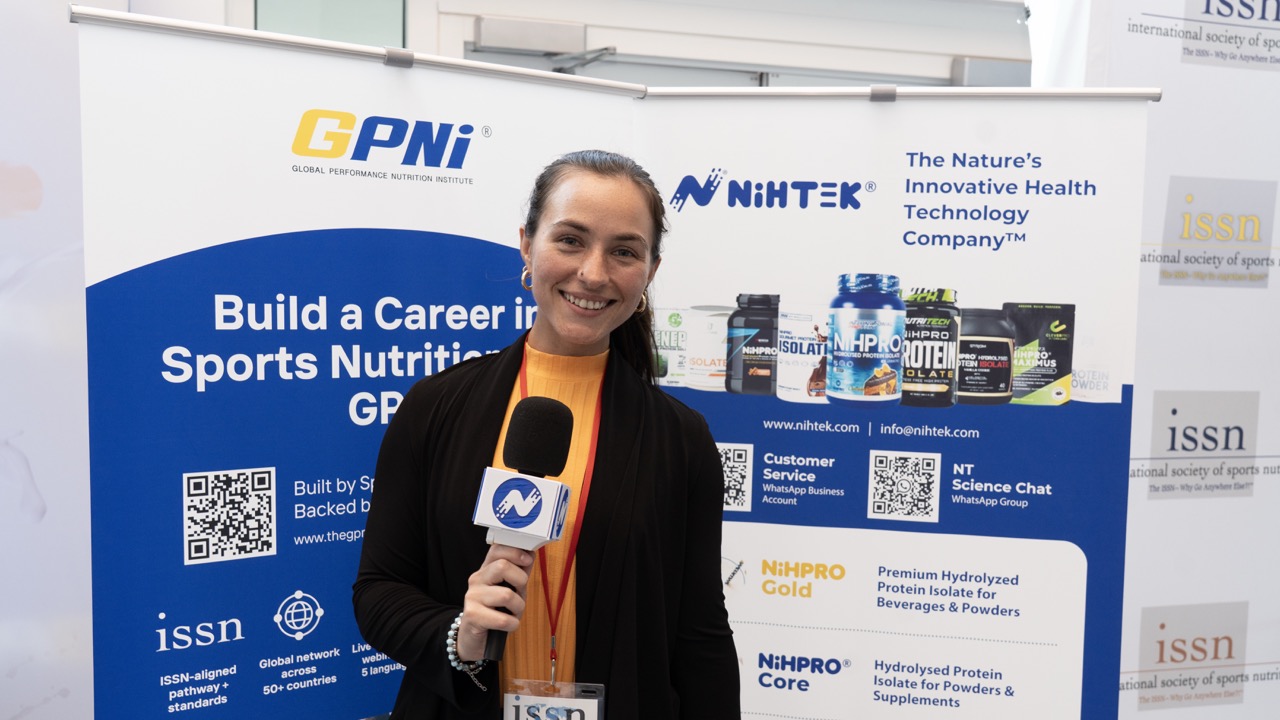
GPNi® Career Insights | Three Ways to Present at Your First Conference
At her first ISSN conference, Allee Schellenberger took on a data blitz, a talk and a poster. Her interest in exercise science began in competitive bodybuilding.
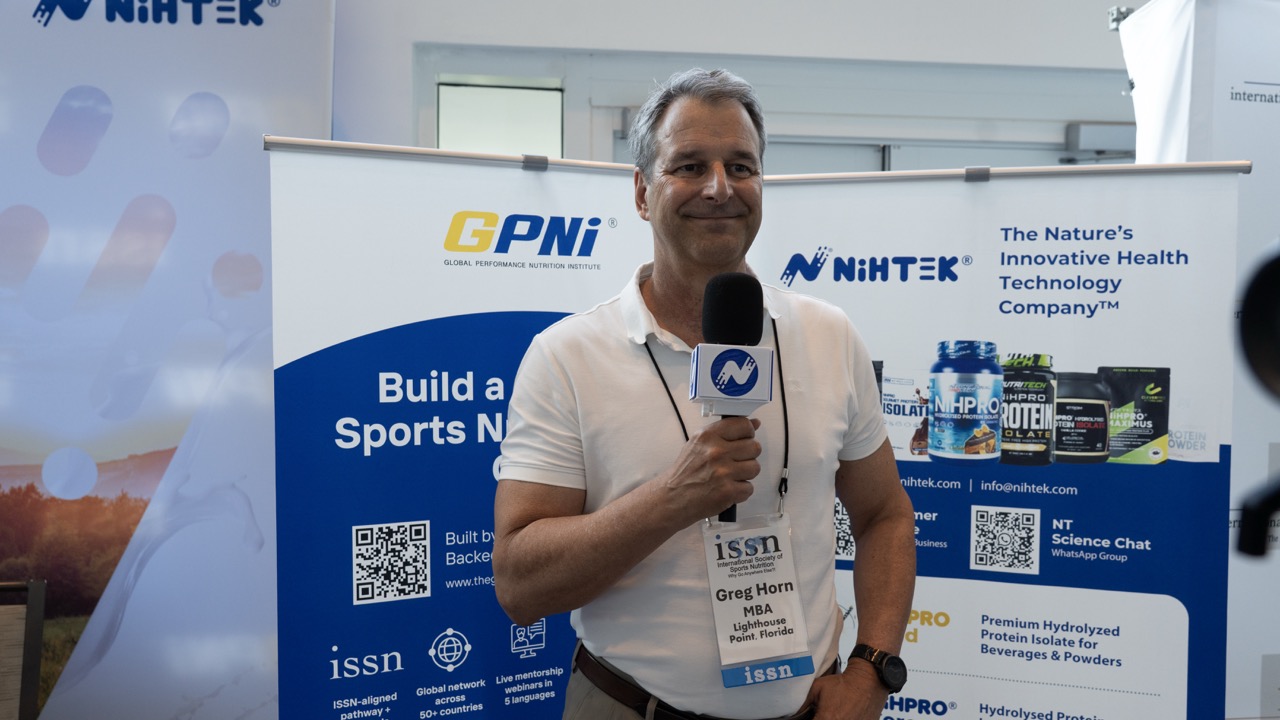
GPNi® Career Insights | What Greg Horn Looks for at the Poster Session
Greg Horn, who originated the CELSIUS drink concept, explains what he looks for in clinical research and why he keeps returning to the ISSN poster session.
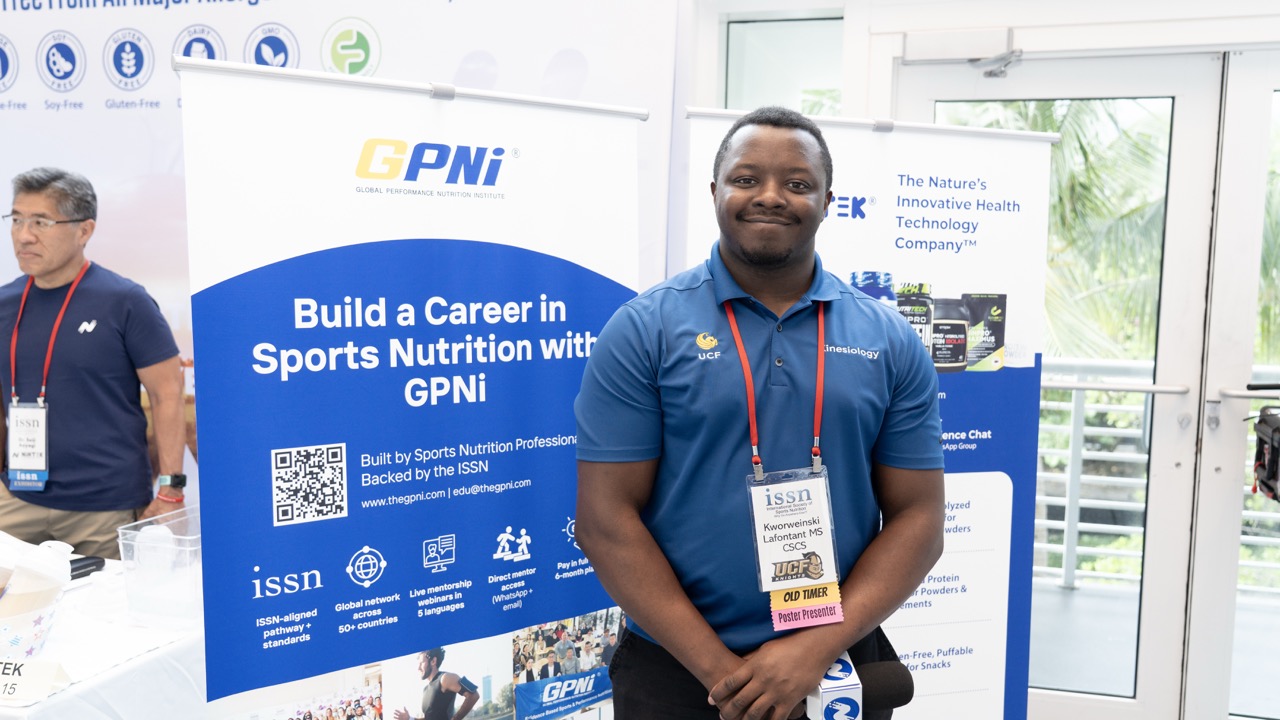
GPNi® Career Insights | The Research Question He’d Rather Share Than Win
Kworweinski Lafontant traces his path from basketball to kinesiology research and explains why sharing an unanswered question can matter more than publishing first.
Subscribe to our newsletter and receive a selection of cool articles every week
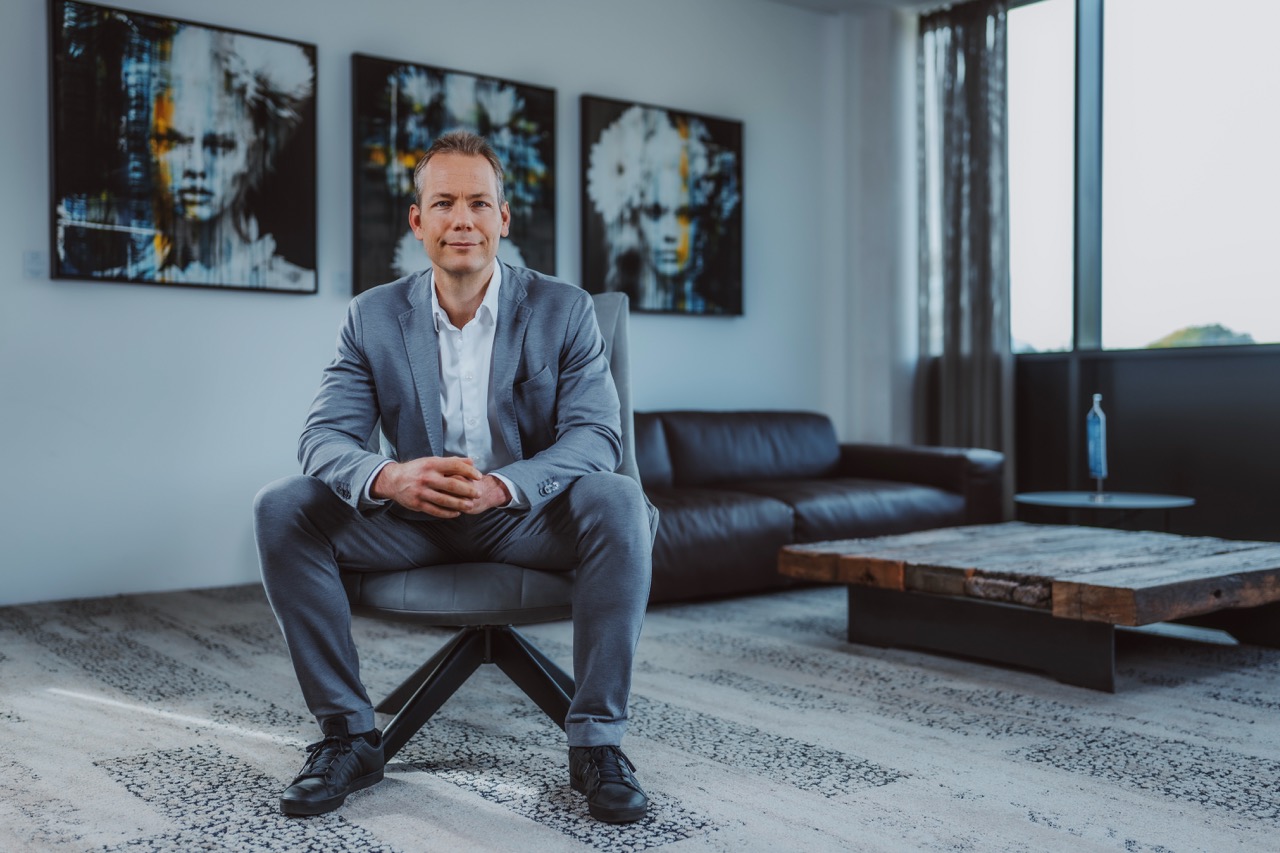
GPNi November Podcast | How Does a 12-Time National Champion Build a Career in Performance and Longevity?
20 Oct, 2026
How Do You Turn Sports Nutrition into a Career? Two Industry Leaders Share What It Really Takes
20 Oct, 2026
GPNi Webinar | Before He Built Fighters, He Had to Become One
24 Aug, 2026
GPNi Webinar | When the Scale Is Only the Beginning
24 Aug, 2026
About