Start for as low as $169 down. Enroll today and pay over time.
Start for as low as $169 down. Enroll today and pay over time.
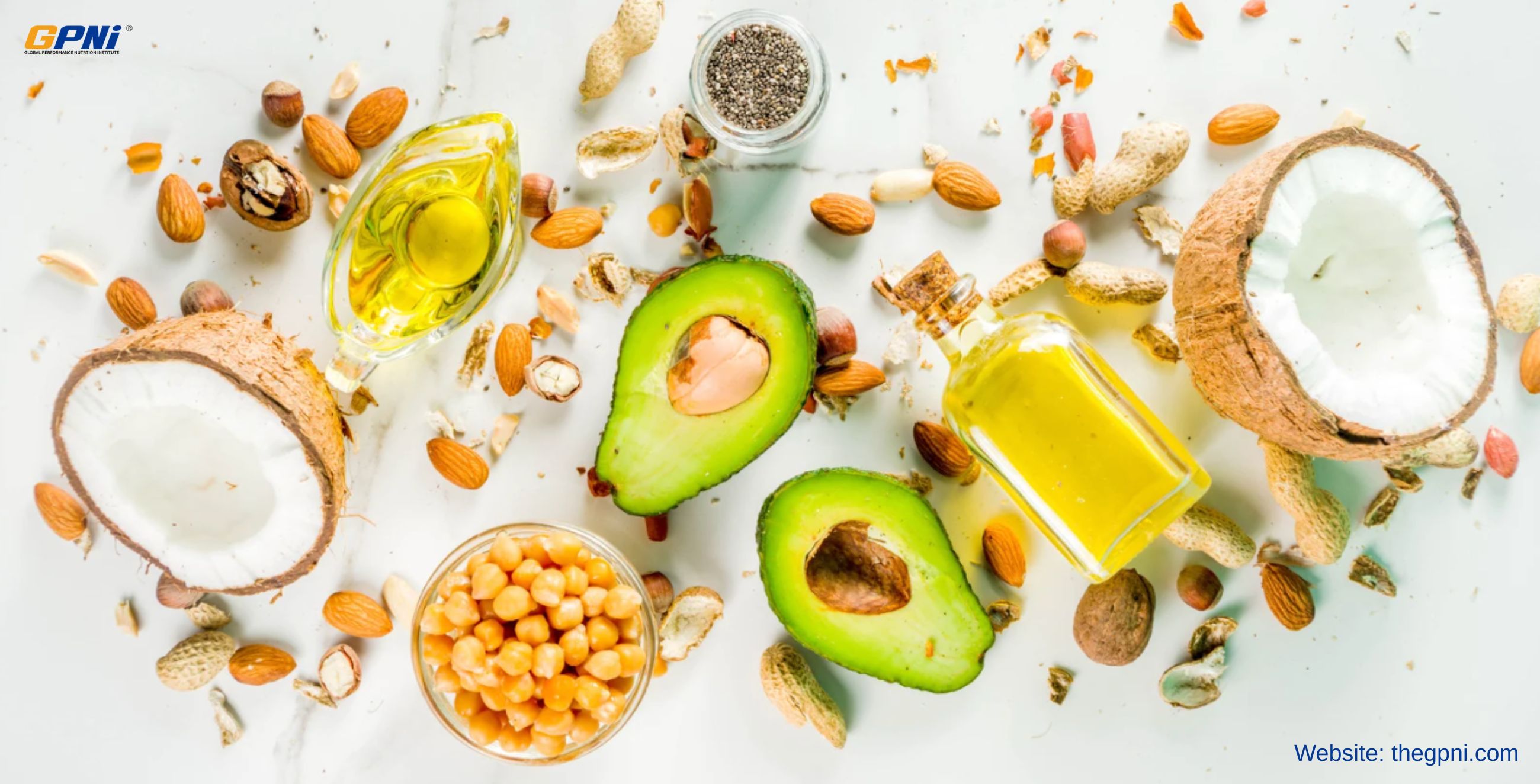
Q: Which two types of fat should athletes generally limit or avoid in a healthy performance nutrition plan?
A. Monounsaturated fat and omega-3 fat
B. Saturated fat and trans fat
C. Polyunsaturated fat and monounsaturated fat
D. Omega-3 fat and omega-6 fat
Correct answer: B. Saturated fat and trans fat
That answer is simple. The real-world nutrition conversation is more nuanced.
In performance nutrition, fat should never be treated as the enemy. Dietary fat provides energy, supports cell function, helps the body absorb fat-soluble vitamins, and contributes to the overall structure and satisfaction of a diet. The key is not to remove fat from an athlete’s diet, but to understand which fats should be prioritized, which should be limited, and which should be avoided.
For athletes and active individuals, this matters because nutrition is not only about acute performance. It also supports long-term health, recovery capacity, body composition, and the ability to train consistently over years.
Saturated fats are found naturally in many foods, especially fatty cuts of meat, poultry skin, butter, cream, cheese, full-fat dairy products, coconut oil, palm oil, and some baked or fried foods. They are often solid at room temperature.
The concern with saturated fat is mainly cardiovascular. A high saturated fat intake can raise LDL cholesterol, a key risk marker for cardiovascular disease. The American Heart Association recommends limiting saturated fat and replacing it with unsaturated fats such as those found in olive oil, canola oil, nuts, seeds, avocado, and fatty fish.
However, saturated fat should not be discussed as if it were identical to industrial trans fat. Saturated fat occurs naturally in many whole foods, some of which also provide protein, calcium, iron, zinc, or other nutrients. The goal is not necessarily “zero saturated fat.” A more practical target is to keep saturated fat within evidence-based limits while improving overall food quality.
The WHO guideline recommends reducing saturated fat intake to 10% of total energy intake and suggests further reducing it below 10% where appropriate. It also recommends replacing saturated fat with polyunsaturated fats, plant-based monounsaturated fats, or fiber-rich carbohydrates such as whole grains, vegetables, fruits, and pulses.
For athletes, the performance takeaway is straightforward: saturated fat is not usually the direct reason someone has a poor training session. But if an athlete’s regular diet is built around high-saturated-fat, low-fiber, heavily processed foods, that diet may compromise cardiometabolic health, body composition management, and overall nutrient density over time.
Trans fats are more clear-cut.
Trans fats can occur naturally in small amounts in meat and dairy products from ruminant animals, but the main concern has historically been industrial trans fats, often produced through partial hydrogenation of oils. These fats were used because they improved shelf life, texture, and stability in processed foods. The problem is that they are harmful to health. The American Heart Association notes that trans fats can raise LDL cholesterol and lower HDL cholesterol, and WHO evidence reviews link lower trans fat intake with reduced risk of cardiovascular disease and coronary heart disease.
For athletes, trans fat has no performance upside. It does not improve strength, endurance, recovery, or body composition. It is simply a fat type to minimize.
Practical sources to watch include some commercial baked goods, deep-fried foods, shortening, margarine-style products in regions where partially hydrogenated oils are still used, and ultra-processed snack foods. Regulations have reduced industrial trans fats in many countries, but athletes who travel internationally or rely heavily on packaged foods should still read labels carefully.

Athletes often focus on protein, carbohydrates, creatine, caffeine, hydration, and timing. Those are important. But the background quality of the diet still matters.
A performance diet needs to do more than fuel one session. It needs to support:
The ISSN position stand on diets and body composition makes an important point: fat loss is primarily driven by a sustained caloric deficit, while lean mass gain is supported by a sustained caloric surplus combined with training. It also notes that a wide range of dietary approaches can improve body composition when they are structured and sustainable.
That means coaches and athletes should avoid simplistic thinking. A food is not automatically “bad” because it contains fat. And a diet is not automatically “healthy” because it is low-fat.
The better question is: What kind of fat is making up the diet?
A performance-focused diet should usually emphasize unsaturated fats from foods such as olive oil, nuts, seeds, avocado, fatty fish, and other minimally processed sources. Saturated fat can fit in moderation, especially when it comes from nutrient-dense whole foods. Trans fat should be kept as low as possible.
One of the most common mistakes in fat education is telling people to “eat less saturated fat” without explaining what should replace it.
This matters because replacing saturated fat with refined carbohydrates or sugary foods is not the same as replacing it with unsaturated fats or whole-food carbohydrates. The AHA’s Presidential Advisory notes that replacing saturated fat with unsaturated fat can lower cardiovascular disease risk within an overall healthy dietary pattern. It also notes that replacing saturated fat with refined carbohydrates is not associated with the same benefit.
For athletes, this becomes a practical plate-building strategy.
Instead of simply saying:
“Eat less fat.”
A better message is:
“Use more unsaturated fat sources, keep saturated fat moderate, avoid trans fat, and make sure your total energy intake still matches your training goal.”
That could look like:
For coaches, sports nutritionists, and active individuals, understanding fat quality is part of basic performance nutrition literacy.
Saturated fat and trans fat are often grouped together as “unhealthy fats,” but they should not be treated exactly the same. Saturated fat is a nutrient to limit and manage within the whole diet. Trans fat is a nutrient to avoid as much as possible.
In practice, the goal is not fear-based nutrition. The goal is better decision-making.
For performance populations, that means building a diet that supports both the next session and the next decade. A strong nutrition plan should help the athlete train hard, recover well, maintain a suitable body composition, and protect long-term health.
That is why fat quality matters.
Not because one meal ruins performance.
But because the patterns repeated every day become the athlete’s physiology.
References
American Heart Association. (2026). Fats in foods.
American Heart Association. (2026). Saturated fats.
Aragon, A. A., Schoenfeld, B. J., Wildman, R., Kleiner, S., VanDusseldorp, T., Taylor, L., Earnest, C. P., Arciero, P. J., Wilborn, C., Kalman, D. S., Stout, J. R., Willoughby, D. S., Campbell, B., Arent, S. M., Bannock, L., Smith-Ryan, A. E., & Antonio, J. (2017). International society of sports nutrition position stand: Diets and body composition. Journal of the International Society of Sports Nutrition, 14, Article 16. DOI: 10.1186/s12970-017-0174-y.
Sacks, F. M., Lichtenstein, A. H., Wu, J. H. Y., Appel, L. J., Creager, M. A., Kris-Etherton, P. M., Miller, M., Rimm, E. B., Rudel, L. L., Robinson, J. G., Stone, N. J., & Van Horn, L. V. (2017). Dietary fats and cardiovascular disease: A presidential advisory from the American Heart Association. Circulation. DOI: 10.1161/CIR.0000000000000510.
World Health Organization. (2023). Saturated fatty acid and trans-fatty acid intake for adults and children: WHO guideline. World Health Organization.
Latest Articles

GPNi Webinar | The Peptide Boom: What’s Real, What’s Regulated, and What’s Risky
Today, let’s take a closer look at Rick’s upcoming presentation on the science, regulation, and market realities of peptides.

Female Athlete Triad: Why “Eating Less to Perform Better” Can Undermine Health and Performance
Female Athlete Triad is a key concept in female athlete health, linking low energy availability, menstrual disturbance, and low bone mineral density. Learn how evidence-based sports nutrition supports performance, recovery, and long-term health.

From Esports to Sports Nutrition: Are Nootropics the Next Big Trend in Performance Nutrition?
Nootropics are emerging in sports nutrition, esports, tactical performance, and brain health. Learn how cognitive nutrition may support focus, decision-making, and mental performance.

Official Study Guide: How to Prepare for SNS/CISSN Certification More Efficiently
Prepare for SNS and CISSN certification more efficiently with evidence-based study strategies, practical learning tools, and exam preparation tips.

5 Sport Nutrition “Truths” That Sound Right — But Aren’t Always True
Learn five common sport nutrition myths about protein timing, carbs, BCAAs, creatine, and pre-workout supplements — and how to think more evidence-based.
Subscribe to our newsletter and receive a selection of cool articles every week
Female Athlete Triad: Why “Eating Less to Perform Better” Can Undermine Health and Performance
12 May, 2026

Hormone-Sensitive Lipase: The Enzyme That Helps Unlock Stored Fat
17 Apr, 2026

What Does an RER Above 1.0 Mean During Exercise?
30 Mar, 2026

Creatine for the Brain: Beyond Muscle - Is There a Cognitive Benefit?
23 Mar, 2026
About